Delve into the past of the beloved brick with a collection of richly illustrated histories that trace LEGO’s evolution from tubular toy to global design icon. This guide highlights five authoritative books that blend archival imagery, timeline maps, and expert narratives to reveal how LEGO shaped play, culture, and creativity across ten decades. Each title offers unique insights for collectors, designers, educators, and casual readers seeking a deeper understanding of LEGO’s enduring impact.
| Title | Author/Brand | Format |
|---|---|---|
| LEGO Timelines: A Visual Journey Through Ten Decades of LEGO History | Simon Hugo (Author) | Hardcover |
| The Secret Life of LEGO® Bricks: The Story of a Design Icon | Daniel Konstanski (Author) | Hardcover |
| The Big Book of LEGO Facts | Simon Hugo (Author) | Hardcover |
| The LEGO Story: How a Little Toy Sparked the World’s Imagination | Jens Andersen (Author) | Hardcover |
| The LEGO® Engineer | Jeff Friesen (Author) | Paperback |
LEGO Timelines: A Visual Journey Through Ten Decades of LEGO History
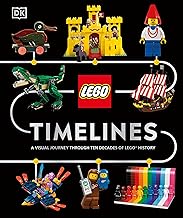
The book offers a comprehensive visual record of LEGO’s evolution from its early blocks to modern modular systems. Readers can expect rich timelines, archival photography, and concise captions that connect product innovations with shifts in design philosophy and global reach. This title serves as a baseline reference for understanding how LEGO’s brick-based culture expanded into education, popular culture, and media properties over ten decades. The narrative emphasizes development milestones, notable collaborations, and the enduring appeal of LEGO’s core building system.
The Secret Life of LEGO® Bricks: The Story of a Design Icon

This book delves into LEGO as a design icon, exploring the creative philosophy, engineering decisions, and design considerations that shaped the brick’s iconic status. It blends anecdotes with technical insights, offering readers a closer look at how form, function, and user experience influenced LEGO’s product development. Expect sections on brick compatibility, color systems, and the balance between play and display in LEGO’s design language.
The Big Book of LEGO Facts
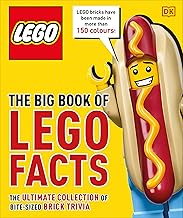
Designed as a compact reference, this volume compiles a broad range of LEGO trivia, statistics, and historical highlights. It’s well-suited for quick lookups, classroom activities, and trivia sessions. While focusing on breadth, the book also highlights some pivotal sets and milestones that illustrate LEGO’s growth from a toy company to a cultural phenomenon. The accessible format makes it a practical companion for fans and researchers alike.
The LEGO Story: How a Little Toy Sparked the World’s Imagination

Historical and cultural context blends with LEGO’s corporate narrative to illustrate how a small Danish company became a global symbol of creativity. The narrative highlights key moments in LEGO’s expansion—international licensing, education initiatives, and popular media adaptations—that broadened its audience beyond traditional play patterns. Readers gain a sense of LEGO’s strategic decisions and the societal factors that helped fuel its worldwide appeal.
The LEGO® Engineer

Focusing on the technical and engineering facets of LEGO, this book appeals to readers who enjoy the problem-solving and mechanical aspects of building. It covers core engineering principles demonstrated through LEGO experiments, set designs, and real-world applications. The content provides actionable ideas for educators and hobbyists seeking to explore physics, engineering concepts, and constructive play with LEGO bricks.
Buying Guide
- Purpose and audience: Choose based on whether you want historical context, design philosophy, quick facts, or engineering emphasis. The first two titles tend to be more narrative and historical, while The Big Book of LEGO Facts leans toward quick-reference style.
- Approach to visuals: Look for books with robust archival imagery and well-annotated timelines if you want a rich visual experience; data-heavy books favor clear charts and lists.
- Editorial credibility: Consider authors with proven expertise in LEGO history or design scholarship. Cross-check publication dates to ensure the edition reflects contemporary LEGO milestones.
- Format and accessibility: Hardcover options often suit collectors and classrooms; paperbacks may be more portable for casual reading.
- Relation to LEGO culture: Some titles emphasize the educational value and maker culture, while others highlight business history and branding strategies. Your choice should align with your interests—design, history, or engineering.
- Edition updates: LEGO’s history includes licensing, media tie-ins, and product strategy—newer editions can capture recent milestones and partnerships that older books may omit.
- Supplementary materials: Check for companion online resources, timelines, or galleries that can enhance learning or teaching experiences.
These works collectively present a balanced view of LEGO’s evolution from a simple construction toy to a multidimensional cultural force. They cover archival history, design philosophy, and practical engineering perspectives, offering readers multiple angles to understand LEGO’s enduring appeal and its role in shaping play and creativity across generations.
Add a Comment