Exploring the history of Asia involves vast timescales, diverse cultures, and pivotal moments that shaped global development. This article curates five well-regarded books that cover different regions and eras, offering readers clear narratives, scholarly insight, and accessible prose. Each entry highlights the book’s scope, strengths, and what to expect when approaching its pages. Whether you are a student, a history enthusiast, or a casual reader, these titles provide solid foundations and engaging perspectives on Asia’s complex past.
| Book | Author/Editor | Region / Focus | Format |
|---|---|---|---|
| Asia: A Concise History | Arthur Cotterell (Author) | Broad Asian history | Paperback / Hardcover |
| A History of East Asia: From the Origins of Civilization to the Twenty-First Century | Charles Holcombe (Author) | East Asia | Paperback |
| History of China: An Enthralling Journey Through Ancient Dynasties, Cultural Splendor, Revolution, and Modernization (Asia) | Billy Wellman (Author) | China | Paperback |
| China: A History | John Keay (Author) | China | Paperback |
| Genghis Khan and the Making of the Modern World | Unknown author | Central Asia / Mongol Empire | Paperback |
Asia: A Concise History

Arthur Cotterell’s Asia: A Concise History offers a broad survey of Asian civilizations across millennia. The work emphasizes sweeping timelines, crucial turning points, and the interplay of political, cultural, and economic forces that shaped the continent. Readers gain a framework for understanding how empires, trade networks, and religious movements influenced neighboring regions. The narrative prioritizes clarity and accessibility, making it suitable for newcomers while still providing enough detail for more seasoned readers seeking structure in Asian history.
A History of East Asia: From the Origins of Civilization to the Twenty-First Century
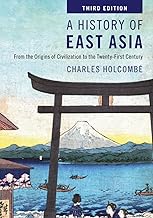
Holcombe’s comprehensive volume surveys East Asia from ancient beginnings through contemporary times. The book traces cultural exchanges, state formation, and modernization, highlighting how China, Japan, Korea, and their neighbors interacted over centuries. It’s known for its chronological cohesion, contextual analysis, and an emphasis on how regional dynamics contributed to global history. This text is well-suited for readers seeking a robust overview that connects early civilizations to modern political and social developments.
History of China: An Enthralling Journey Through Ancient Dynasties, Cultural Splendor, Revolution, and Modernization (Asia)

This volume presents a lively journey through China’s long arc—from imperial dynasties to transformative modern changes. Its scope includes cultural achievements, revolutionary movements, and contemporary reforms that have redefined China’s place in the world. The writing aims to balance narrative energy with scholarly context, making it accessible to general readers while still offering precise historical detail for research or coursework.
China: A History

John Keay’s China: A History provides a sweeping account of the country’s evolution, focusing on continuity and change across dynasties, social structures, and religious developments. The prose is designed to be readable without sacrificing depth, and the narrative often foregrounds cause-and-effect: how political leadership, agricultural innovations, and international interactions shaped China’s trajectory. The book is particularly valuable for readers seeking a cohesive story that ties early cultural foundations to later modernization.
Genghis Khan and the Making of the Modern World

This title places the Mongol leader in a broader context, examining how his campaigns and the empire he helped forge influenced cross-cultural exchange, trade, and political structures across Eurasia. The work emphasizes historical causality and the long-term effects of Mongol expansion on neighboring states and global networks. Readers will find a focused look at military strategy, governance, and the resulting transformations that resonate well beyond Central Asia.
Buying Guide
Key considerations when selecting a history of Asia book include scope, geography, and audience. If you want a broad panorama that connects multiple regions, choose a title like Asia: A Concise History or A History of East Asia. For a focused China-centered account, options such as History of China or China: A History offer deeper dives into dynastic cycles and modernization. Consider the author’s background and the level of scholarly apparatus you prefer—some books emphasize narrative flow for general readers, others foreground footnotes, bibliographies, and source analysis for students. Editions and publication dates also matter for up-to-date context on best-known milestones and historiographical debates.
Perspective is another important factor. East Asian histories may emphasize state power, cultural production, or social history, while broader surveys highlight trade networks like the Silk Road and the impact of globalization. If you enjoy narrative-driven histories, look for authors who blend storytelling with clear causal links between events. For readers seeking critical analysis, prioritize works that discuss historiography, bias, and differing regional viewpoints. Finally, consider format preferences—paperback for portability, hardcover for longevity, and digital editions for searchability and annotation. The right title depends on your goals, whether coursework, research, or personal enrichment.
Add a Comment