Dr. Seuss-themed writing supplies make learning to write and draw fun for young students. This guide highlights five kid-friendly options that blend beloved Seuss characters with helpful handwriting practice, drawing spaces, and creative prompts. Each product is designed to engage children ages 4–8 while supporting early literacy and fine-motor skills. Below you’ll find quick overviews, visual previews, and practical considerations to help caregivers choose the right fit for home practice, classrooms, or travel time.
Summary of chosen products:
| Product | Brand |
|---|---|
| Dr. Seuss Handwriting Workbook: Tracing and Handwriting Practice for Kids Ages 4-6 | Dr. Seuss (Author) |
| Raymond Geddes Dr Seuss Mini Memo Pad (Pack of 48) | GEDDES Store |
| Handwriting Practice Paper: 120 Pages, Blank Dotted lined Paper For Students Learning to Write Letters | H.writing Publishing (Author) |
| 100 Sheets Writing Beginner Paper for Kids Create Story | Frankly, various; includes top line features |
| My Book About Me By ME Myself | Dr. Seuss (Author), Roy McKie (Author) |
Dr. Seuss Handwriting Workbook: Tracing and Handwriting Practice

This handwriting workbook focuses on tracing and letter formation for children ages 4–6. It combines Dr. Seuss branding with structured practice to reinforce handwriting basics, including letter shapes, correct posture, and stroke order. The workbook’s guided sections help young learners move from tracing to freehand writing, supporting early literacy development while maintaining engagement through Seuss-friendly themes and characters.
Key features include beginner-friendly tracing exercises, clearly labeled lines, and progressive practice sets. The materials are designed to build confidence as kids learn basic handwriting mechanics, paving the way for neater penmanship and stronger writing fluency. Parents and educators can rotate through sections to maintain interest and monitor progress over time.
Raymond Geddes Dr Seuss Mini Memo Pad (Pack of 48)

These mini memo pads pair Seuss-style artwork with compact, kid-sized writing space. The 48-pad pack offers plenty of practice opportunities for short notes, doodles, and story ideas. The colorful scratch-pad designs help sustain attention during writing sessions while encouraging tidy, legible handwriting in short bursts. Each pad provides 20 pages, embellished with decorative borders that add a playful touch to everyday writing tasks.
The format is ideal for quick spelling practice, friendly reminders, or little messages to family and friends. While primarily a notebook, the pads also serve as a motivational tool—kids can write captions for Seuss-inspired drawings or capture a tiny story in a few lines. The sturdy pads are portable enough for travel and classroom activities alike.
Handwriting Practice Paper: 120 Pages, Blank Dotted Lined Paper For Students

This handwriting paper blends dotted guide lines with a traditional ruled format to help new writers form both uppercase and lowercase letters accurately. The 120 pages provide ample space for consistent practice, while the dotted line in between bold lines acts as a reliable visual cue for proper letter height and alignment. The paper is suitable for printable exercises, guided handwriting sessions, and independent practice while encouraging creativity through associated writing prompts on the page margins.
Adults can introduce a routine that alternates tracing, copying, and independent writing tasks. The paper is durable enough for use with markers or pencils and is well-suited for early elementary writing programs, journaling, or story prompts that accompany a Seuss-themed learning plan.
100 Sheets Writing Beginner Paper for Kids Create Story
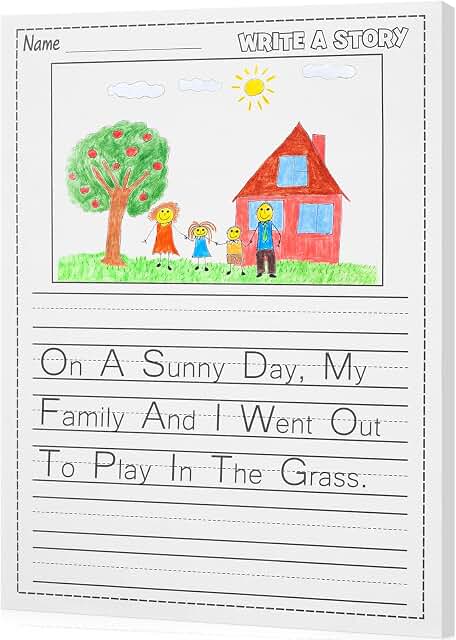
This 100-sheet collection combines half-page drawing space with writing lines to encourage storytelling. The design supports creativity and literacy as kids sketch scenes and then narrate them in writing. The lines feature two bold lines separated by a dotted line, guiding proper letter size and spacing while allowing for expressive, first-draft storytelling. The top space includes a name field and a “Write a Story” header to help with organization and identification of each piece’s author.
Paper quality is suitable for pencils, crayons, colored markers, and light ink. The package’s generous dimensions (8.5 x 11 inches) provide a comfortable canvas for young writers to experiment with letter shapes, words, and short sentences while keeping drawing activities integrated into the learning process.
My Book About Me By ME Myself

This interactive Seuss-inspired activity book invites children to write about themselves, their favorites, and their dreams. The format blends playful prompts with guided writing spaces, making it suitable for morning routines, journaling, or classroom writing projects. Roy McKie’s illustrative contributions pair with Dr. Seuss’s distinctive style to hold a child’s attention while fostering self-expression, personal reflection, and writing stamina. The book’s age-friendly layout supports sequential writing tasks and can be revisited for ongoing literacy growth.
Buying Guide: Dr. Seuss Writing Paper and Practice Tools
- Age appropriateness and skill progression: Look for products that start with tracing or dotted lines and advance toward independent writing. The right item scales with a child’s development from basic letter formation to story creation.
- Format and space: Consider whether your child benefits from combined drawing and writing space, or separate writing sheets. Mixed formats can boost creativity and keep engagement high.
- Brand and branding: Dr. Seuss-themed materials tend to be visually engaging for younger learners. Ensure the design aligns with your educational goals and that pages encourage legible handwriting rather than just doodling.
- Portability and durability: For families on the go, compact pads or lightweight notebooks are ideal. Durable paper that resists heavy erasing or marker bleed-through helps maintain clarity as practice accumulates.
- Practice variety: A combination of handwriting drills, drawing prompts, and short storytelling pages supports a well-rounded literacy routine. Mixing these formats can reduce monotony and improve retention.
- Assessment and feedback: Check whether the product includes guidance for parents or teachers to track progress, correct common errors, and tailor practice to a child’s needs.
- Material compatibility: Most pages work well with pencils, crayons, and light markers. If your child uses darker inks, verify bleed-through resistance and paper thickness.
- Cost and value: A pack with multiple pads or a large notebook set often yields better long-term value, especially for daily or weekly practice schedules.
- Integrating Seuss themes with learning goals: Seuss materials can motivate kids to practice writing while exploring storytelling, rhymes, and character-based prompts.
Add a Comment